AI Sales Coaching vs Human Managers: The Truth Behind the Numbers
AI sales coaching vs human managers in 2026: where each wins, how teams combine both, and the win-rate gains documented across 137+ organizations.

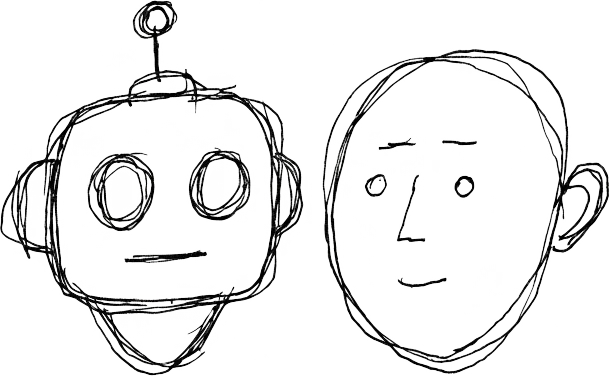
AI sales coaching and human managers are not substitutes. Teams that combine both outperform teams that pick one. AI scores every call, applies consistent criteria, and runs at scale. Human managers handle context, relationships, and the parts of coaching that need judgment. AI Sales Coaching at Demodesk runs the AI layer at EUR 49/user/month annual.
What AI sales coaching does
AI coaching evaluates every conversation against your scorecard. Not 5–10 calls a month per rep, the way a manager can. Every call.
The advantages stack quickly.
Coverage.A team of 50 reps generates roughly 1,500 calls a month. A human manager reviews 5–10 per rep. The other 95% goes uncoached. AI evaluates the full volume overnight.
Consistency.AI applies identical criteria regardless of time of day, manager mood, or rep relationship. Human evaluations vary 15–30% on the same call across managers.
Pattern recognition. Across hundreds of calls, AI surfaces team-wide blind spots: missed discovery questions, recurring objections, talk-time issues. These are invisible at the per-call level.
Speed. Feedback within minutes of call end. Reps adjust before their next conversation. The half-life on coaching impact drops from days to minutes.
What human managers still do better
Three coaching jobs AI does not replace.
Context.A rep who structurally underperforms might be facing a divorce or a parent's illness. AI sees the metrics. The manager sees the human.
Career conversations. Path to senior AE, transition to management, compensation. These require trust and discretion no model has.
Confidence work. Reps who score well on metrics but freeze in real conversations need 1:1 reps with someone who has been there. AI prompts the topic; a manager runs the conversation.
Stakes calibration. Performance plans, terminations, hires. Always human.
How teams combine both
The strongest revenue orgs run a layered model.
Layer 1: AI scores every call. MEDDIC, BANT, SPICED, or custom scorecard. Persisted on the deal record.
Layer 2: Manager reviews the AI-flagged subset. Calls where the rep scored below threshold on critical criteria (discovery, objection handling, next-step clarity).
Layer 3: Weekly 1:1. Manager and rep work the patterns the AI surfaced across the week. Not 5 sampled calls. The actual trend.
Layer 4: Quarterly retros. Manager runs deal post-mortems on wins and losses. AI provides the data; the manager runs the interpretation.
The split is roughly 60–40. AI handles 60% of what used to be manager workload (scoring, pattern detection, follow-up assignment). The 40% the manager keeps is the higher-impact 40%.
What changes when AI joins the team
Teams running an AI coach plus human managers see three outcomes within two quarters.
Coaching coverage rises from 5–10% to 100%. Every call gets scored.
Manager time recovered.5–8 hours per week per manager that used to go to call review now goes to deal strategy and individual development.
Win-rate improvement.Teams combining AI and human coaching report 15–25% win-rate gains over teams using either alone, per cross-organization performance data from our customer base.
The math compounds. Better coaching produces better calls, which produce cleaner data, which produces sharper AI feedback, which produces better coaching.
Where AI coaching breaks down
Two failure modes worth flagging.
Generic scorecards. Off-the-shelf MEDDIC scoring underperforms a team-specific scorecard. The fix is to configure the AI to your methodology, your stages, your ICP-specific qualification questions.
Manager skepticism. Some managers reject AI scoring because they cannot replicate the score by reading the transcript. The fix is transparency: AI should surface the exact moment in the call that drove each score, not the number alone.
Both are configuration problems, not category problems.
What Demodesk's AI Coach does
Records every call. Transcribes in 98 languages. Scores against your methodology (MEDDIC, BANT, SPICED, MEDDPICC, or fully custom). Surfaces the moment in the call that drove each score so managers can verify. Routes coaching moments to the right manager with full context.
Pairs with AI Analyst for team-wide pattern detection: objection trends, competitor mentions, win-loss factors by segment.
EUR 49/user/month annual at Demodesk. Free 14-day trial.
FAQ
Does AI coaching replace sales managers?
No. AI handles the scoring and pattern detection. Managers handle context, relationships, and career work. Teams that try to replace managers with AI alone see worse outcomes than teams that combine both.
How accurate is AI scoring on real calls?
When the scorecard is configured to the team's methodology, agreement with manager-scored calls runs 85–95% on critical criteria (discovery, qualification, next-step clarity). Edge cases need manager review.
Will reps trust AI feedback?
Adoption is the make-or-break. The teams with the highest trust ratings on AI coaching share three traits: the scorecard reflects how the team sells in real conditions, the AI cites the exact moment in the call that drove each score, and managers reinforce the AI's flags in 1:1s rather than overriding them.
What does Demodesk cost vs alternatives?
Demodesk: EUR 49/user/month annual. Gong: USD 1,200–1,600/user/year plus platform fee. Chorus: enterprise quote-based. See 5 best AI Sales Coaching Tools for the full breakdown.
How long until win-rate gains show up?
Coverage and time-recovery gains in week 1. Coaching impact in weeks 4–6. Win-rate impact in quarter 2 once the team has internalized the coaching patterns.